Frequently asked questions :
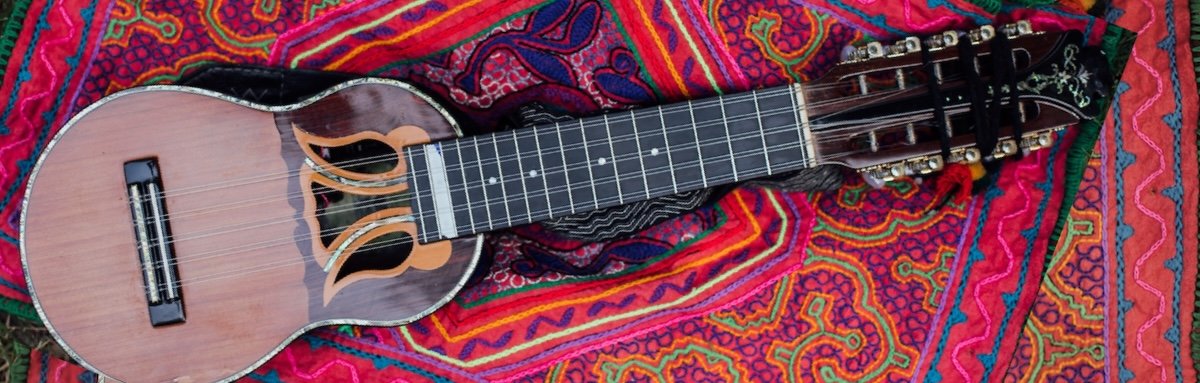
QUESTION: What is the charango?
ANSWER: The charango is a 10-string instrument from the Andes mountains,
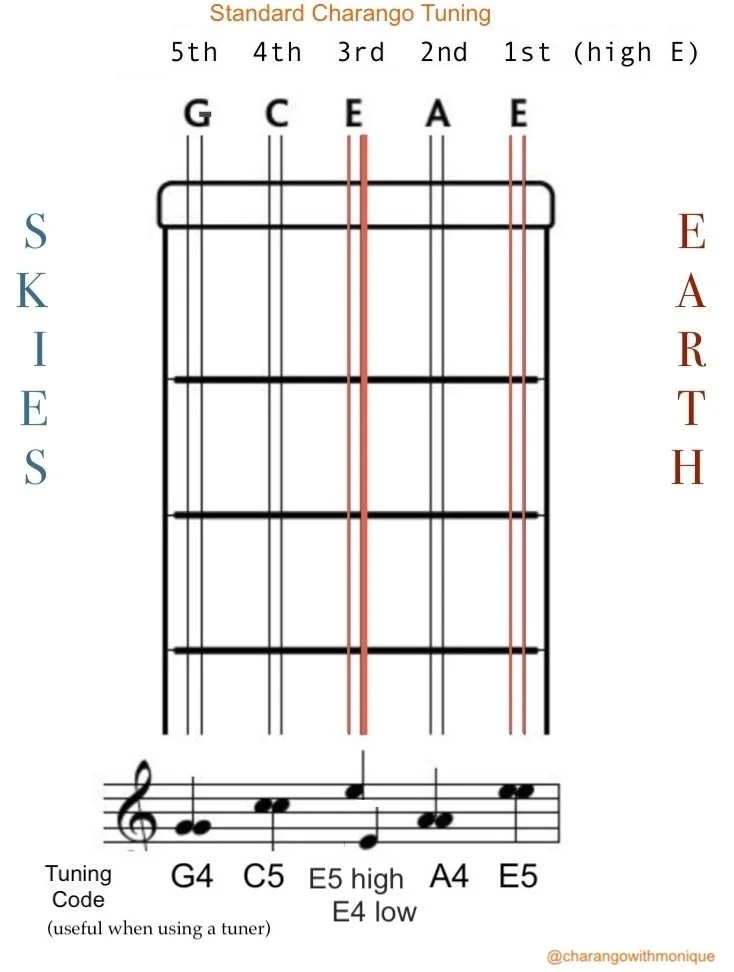
Q: What is the ”standard” charango tuning?
A: There are many diverse tunings, the “standard” tuning is as follows (see image).
The charango comes in many shapes, sizes and tunings, and is used by many communities throughout the Andes regions (and world). These range from indigenous to mestizo, from celebration to ceremony, from mermaid celebrations to offerings to Mother Nature.
There are SO many names for the variations of the instrument throughout the Andes. Keep an open mind, an open heart and especially open ears to hear the many diverse styles, ways of playing, and ways of using the charango to bring (our) communities together.
“Standard” charango tuning (listed from 5th to 1st set of strings):
G4 G4 C5 C5 E5 E4 A4 A4 E5 E5
Q: Do you have a YouTube channel with Charango tutorials and Play Thrus of popular Medicine Songs?
A: Yes! ✨✨✨ Subscribe here and select the little bell for notifications when new videos are published.
Q: Can you prepare arrangements, transcriptions and TABs for my favorite medicine songs on charango?
A: Yes! Email me at charangowithmonique@gmail.com with the song you would like prepared, and your level of playing . Exchange varies per the complexity of the song.
Examples include: -Sirenita Bobinzana (A.Mena) , ”Hymno” (Awarë)., and “Naturaleza Divina” (Loli Cósmica)
Q: What charangos do you recommend? I am based in the US and looking for a quality charango in the US.
A: Look no further! Get yourself a beautiful Spiral Charango!
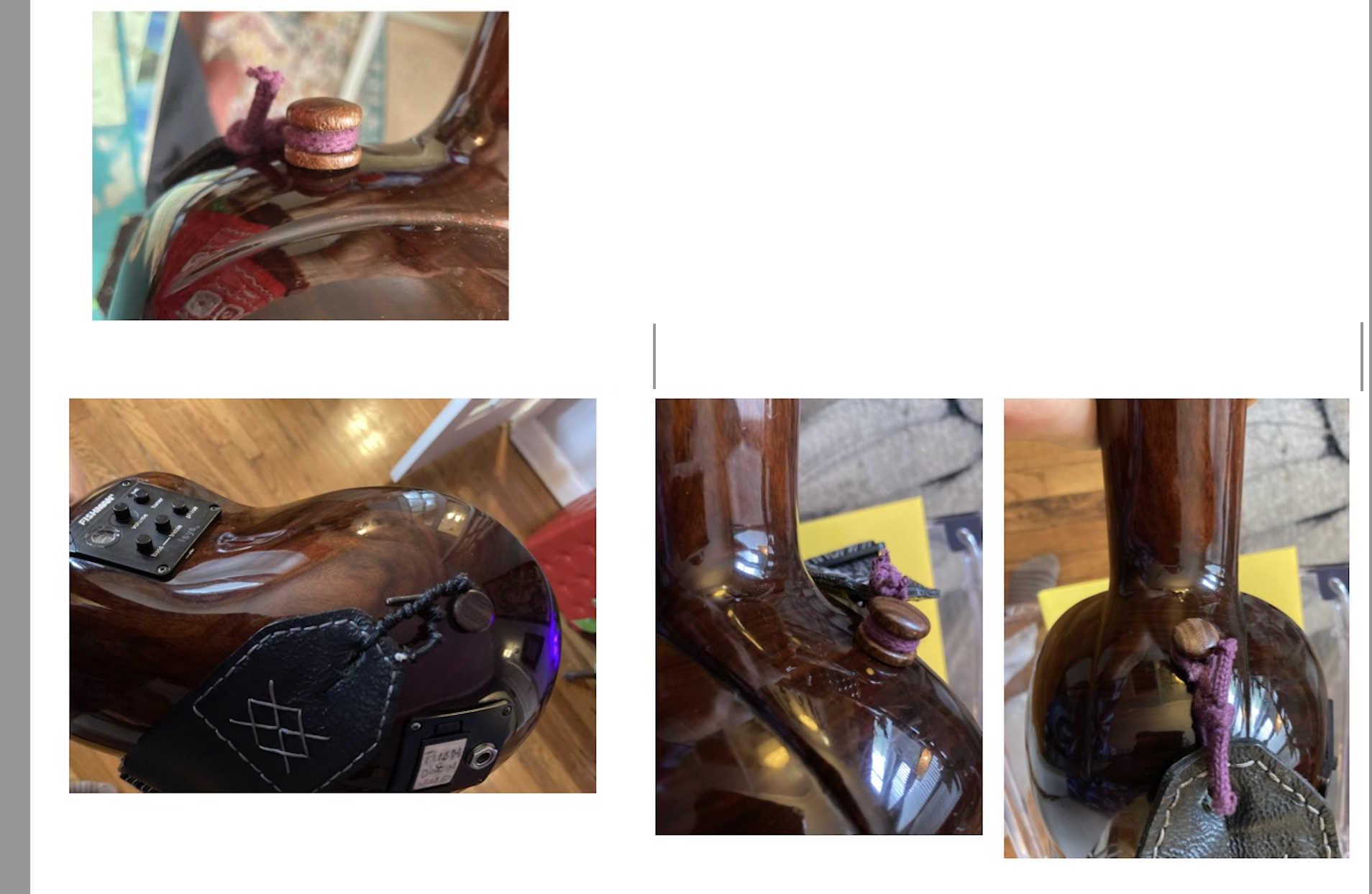
Q: Where do you prefer having strap buttons placed on your charango?
A: Here:
Q: Are there any Method Books available in English to deepen my studies?
A: Yes. There is the Charango Method book by Horacio Durán and Ítalo Pedrotti, first published in Chile in 2010. In Spanish with excellent side-by-side translation in English by Julius Reder Carlson. It is a great resource for intermediate-to-advanced players looking to dive into Andean rhythms, arpeggios and repertoire.
For more advance harmony studies applied to the charango, order a copy of The Spirit of Charango, Study Method by José Escobedo, 2023. in Spanish & English (translation by Tina Hagar and Monique Mizrahi.) Includes section on intervals and drop2s and scales as well a contemporary repertoire. 196 pages.
Q: What is Medicine Music?
A: Read this beautiful description by Adrian Freedman on his website here.
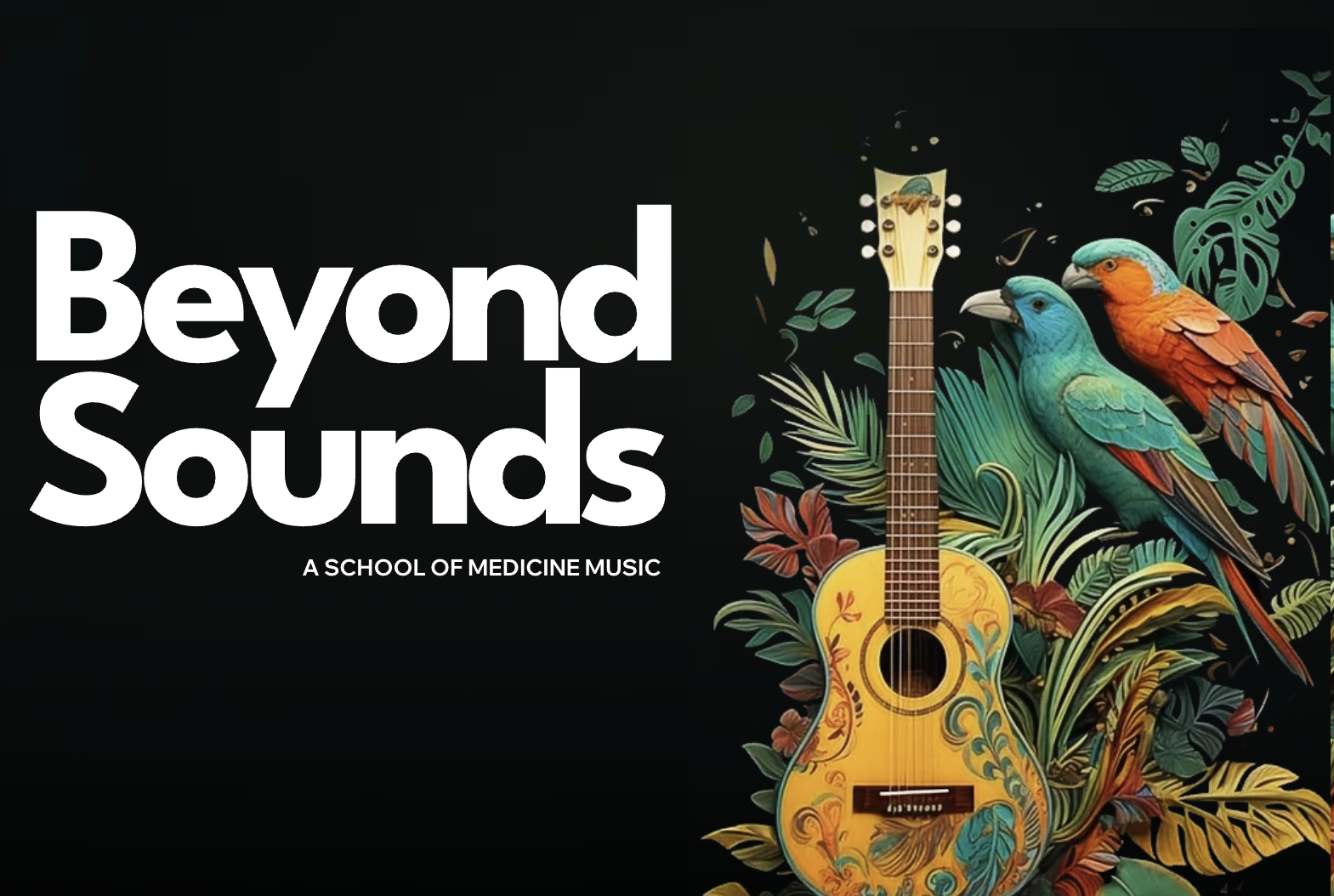
Q: Is there an Online Medicine Music Community you recommend?
A: Yes!! Visit Beyond Sounds - School of Medicine Music!
Enjoy incredible content, masterclasses, online Singing Circles and more!
Q: Can I transpose songs on YouTube to play along and practice with in other keys?
A: Yes! Use Google chrome extension called Transpose ,
Q: Where can I find more resources about the Charango, including about its history and cultural context?
A: Visit this website Charango para Todos ( https://www.charango.cl/?lang=it ) website of Maestro Héctor Soto for incredible resources about the charango and its history (in Spanish), including many visions about its origin.
Q: How can I make a contribution to an institute doing research on Andean music?
A: Visit the website of Taki Institute that preserves and celebrates the musical, spiritual, and educational traditions of the Andes and Amazon in the Sacred Valley.
Q: What strings do you use?
A: The main strings I use are Aquila Corde sugar strings, made of cane sugar derivatives, a bio-plastic that gives a bright sound.
Q: Where can I find blank sheet music for notating Charango TAB and such?
A: Visit Dario’s website, look for 5-string instrument (good for charango) and buy him a coffee if the resources are useful!
Q: What is unique about your teaching style?
I have developed a metholodogy for teaching medicine music on charango - and for teaching charango to absolute beginners - so that they can bring songs to their communities, and to their hearts, in an approachable way.
This includes the creation of new didactic materials, exercises, TABs and arrangements.
I collaborate with educators in the Global South and help direct respect and resources back to the communities that sustain this instrument. I also support and collaborate with women and women-identified, Queer and LGBTQ+ Andean charanguistas.
We have a network of charango teachers, each with their own unique modalities, expertise and offerings.
Thank you for your interest.
I humbly offer you lessons.
To support the work I humbly do daily researching the SOURCE of medicine songs and bringing you ethically-sourced content, you can Venmo me at @Monique-Mizrahi Thank you very much.